Custom Web Application Development: Is a Website Enough?
Custom web application development explained for Indian businesses: when a website is not enough, what it costs, how long it takes and how to scope it.

Summary of this article
- Defines a web application and explains how it differs from a marketing website, including the progressive web app option.
- Lists the signs that a business has outgrown templates, plugins and spreadsheets.
- Gives indicative INR cost and timeline ranges by project type, labelled as estimates.
- Walks through a five-step build process and the architecture decisions that matter most.
- Covers security, data privacy under India's DPDP Rules and how Arham Technology approaches these projects.
Summarised by AI from the full article. Check figures and prices against the article before you act on them.

Quick answer
You need custom web application development when your site must run logic, not just show pages: logins, role-based access, approvals, pricing rules or integrations with a CRM or ERP. A focused first release in India typically costs about ₹3,00,000–₹10,00,000 and takes roughly 6–12 weeks, depending on workflows and integrations.
Key takeaways
- A website presents content; a web application lets users log in, change data and trigger business rules.
- Move to a custom web application when plugins, spreadsheets or manual follow-ups are doing the work of software.
- Scope the first release around one workflow and one user role, then add features after real usage.
- Budget for security, roles, audit logs and hosting from day one, because they are expensive to bolt on later.
- Ask for repository access, documentation and a staging link every sprint so you are never locked in.
On this page
- What is custom web application development?
- How do you know a website is no longer enough?
- Which types of custom web applications do Indian businesses build?
- How much does custom web application development cost in India?
- How is a custom web application built, step by step?
- Which technology choices matter most?
- What about security and data privacy in India?
- How Arham Technology approaches custom web application development
- What should you do next?
Your website looks fine, but the real work still happens in spreadsheets, WhatsApp groups and plugin workarounds. Dealers email order sheets, staff re-type enquiries into a CRM, and quotes depend on one person who knows the pricing rules. That is the point where custom web application development starts to make more sense than another redesign.
This guide explains what a web application is, how to tell whether you need one, what it costs in India, and how a sensible build is scoped so the first release ships in weeks rather than quarters.
What is custom web application development?
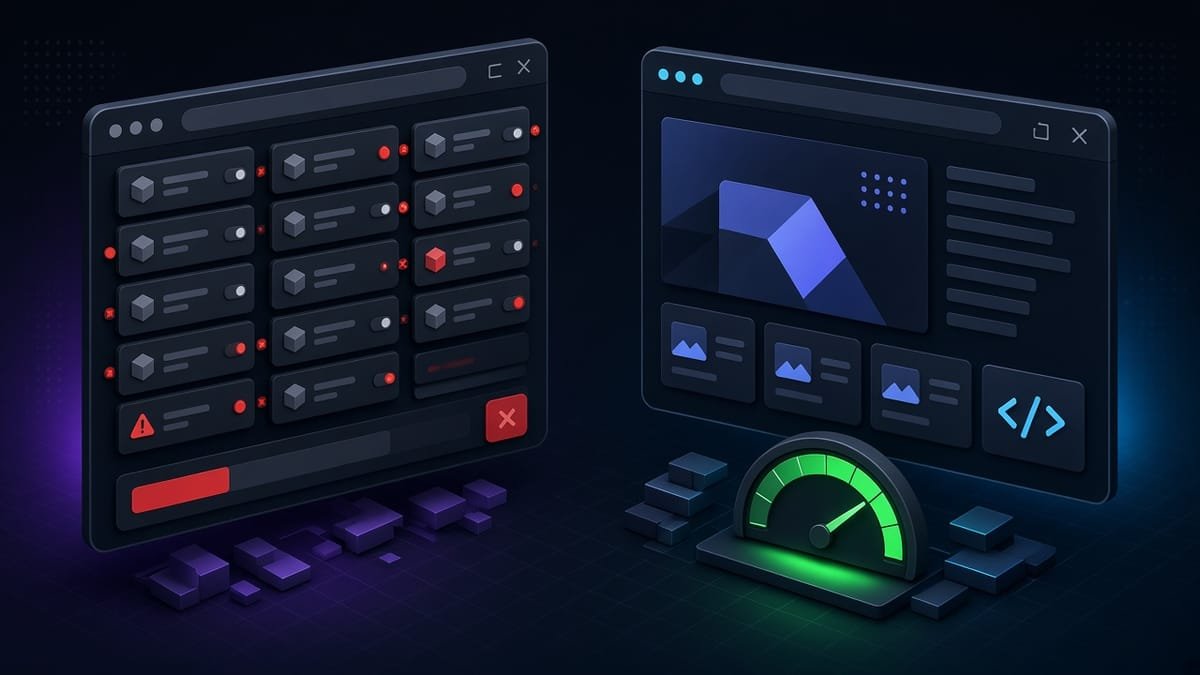
Custom web application development is the engineering of browser-based software around your own workflows, data and rules, instead of adapting a template or plugin. A web application is software delivered over the web and used through a URL, with logins, stored data and logic behind the screen.
A marketing website is mostly pages. A web application is mostly behaviour: calculating, validating, approving, notifying and syncing. Modern browsers can also make a web app feel like an installed app. As MDN explains for progressive web apps, a PWA is built with standard web technologies, runs from a single codebase on many devices and can be installable and work offline.
How do you know a website is no longer enough?
A website is no longer enough when the people using it need to change data or follow rules, not just read pages. These are the signals we see most often:
- Customers, dealers or staff need logins and see different things based on their role.
- Pricing, eligibility or delivery depends on rules that change by customer, region or quantity.
- A process needs approvals, statuses and reminders, such as quote, review, order and dispatch.
- Data is copied by hand between the website, a CRM, an accounting tool and a spreadsheet.
- Plugins conflict, and each "quick fix" makes the site harder to maintain. Our comparison of a custom website vs WordPress covers that trade-off in detail.
If two or more of these apply, you are describing software, and it should be designed and tested like software.
Which types of custom web applications do Indian businesses build?
Most business web applications fall into a handful of patterns. Each one replaces a manual process with a screen and a rule set.
| Application type | What it replaces | Typical users |
|---|---|---|
| Dealer or distributor portal | Emailed order sheets and PDF price lists | Distributors, sales team |
| Quote and configuration engine | Manual quoting in Excel | Sales, customers |
| Client portal | Status calls and scattered file sharing | Customers, project managers |
| Internal operations tool | Spreadsheets for approvals, scheduling, inventory | Staff, field teams |
| Booking or membership platform | Phone bookings and manual payment follow-ups | Customers, admins |
If you plan to sell the same product to many separate customer accounts, you are in SaaS territory, and our guide to multi-tenant SaaS architecture covers the extra design decisions.
How much does custom web application development cost in India?
Cost depends on the number of user roles, workflows, integrations and the level of security required. The ranges below are indicative estimates based on project experience, not fixed quotes.
| Project scope | Indicative cost (India) | Typical first release |
|---|---|---|
| Single workflow, one or two roles | ₹3,00,000–₹6,00,000 | 6–8 weeks |
| Portal with several roles, reports and two integrations | ₹6,00,000–₹10,00,000 | 8–12 weeks |
| Multi-module platform, payments, complex rules | ₹10,00,000 and above | Phased over several releases |
Prices vary with design depth, team location and how clearly requirements are defined. Add GST at the applicable rate, plus hosting, third-party API charges and a maintenance retainer. For the broader picture of site pricing, see our website development cost guide.
How is a custom web application built, step by step?
A good build protects you from surprises by shipping small slices early. This is the sequence we recommend:
- Map the workflow. Document how orders, tickets or approvals actually move, including the exceptions staff handle daily.
- Model the data and permissions. Define the entities, roles and API contracts so the frontend and backend share one source of truth.
- Build in vertical slices. Ship one complete flow at a time to a staging link, so feedback arrives while changes are still cheap.
- Harden and test. Check authentication, input validation, rate limits and failure states with realistic data volumes.
- Launch, monitor and iterate. Release to a small group first, watch real usage, then prioritise the next features.
The most expensive mistake is skipping step 1. Software that automates a misunderstood process simply makes the wrong process faster.
Which technology choices matter most?
Choose technology to match your team's long-term ability to maintain it, not what is trending. Three decisions carry most of the weight:
- Frontend framework. Angular suits large, form-heavy applications with many screens; React suits flexible, component-driven interfaces. Our Angular vs React comparison explains how to choose.
- Backend and API. Node.js and Laravel are both common in India. See Node.js vs Laravel for the trade-offs.
- Database. PostgreSQL is a strong default for relational business data such as orders, customers and invoices. Use document stores only when your data really is schema-flexible.
A custom build can also keep editing easy: a headless CMS can manage marketing pages while the application handles the logic.
What about security and data privacy in India?
Security has to be designed in, because retrofitting it is slow and costly. At minimum, plan for role-based access, server-side validation, encrypted connections, hashed passwords, audit logs and tested backups.
Privacy law now matters too. India notified the Digital Personal Data Protection Rules, 2025 in November 2025, and the Government of India's release describes an eighteen-month phased compliance period, with a clear, separate consent notice for each purpose. If your application collects customer data, design consent, access and deletion handling into the first release, and confirm obligations with your legal adviser.
How Arham Technology approaches custom web application development
We start with workflow forensics: watching how deals, tickets or orders actually move before any interface is drawn. From there, the work follows the same path described above, with concrete deliverables at each stage.
- Discovery workshops that turn your procedures into user stories and acceptance criteria.
- A domain model with roles, permissions and API contracts.
- Custom UI for multi-step flows, calculators and gated content.
- Integrations with CRMs, ERPs and payment providers over REST or GraphQL.
- Audit-friendly logging, environment-based configuration and a documentation pack with handover notes.
- Fortnightly sprint demos on staging, with repository access for you throughout.
Our custom website development service is built for exactly this gap between a brochure site and full product software. If the application will become a product with many customer accounts, our SaaS development service covers that path.
What should you do next?
Write down one workflow that costs your team the most time each week, list who touches it and where it breaks. That page is the start of a scope. If you want a second opinion, review our custom website development service and then contact Arham Technology with your workflow. We will sketch the architecture, a phased plan and an honest estimate before you commit to a full build.
Frequently asked questions
What is the difference between a website and a web application?
A website mainly presents content that visitors read. A web application lets users sign in, enter or change data and trigger business rules, such as placing a dealer order or approving a request. Many projects combine both: a public marketing site plus an authenticated application area.
How much does custom web application development cost in India?
As an indicative range based on project experience, a focused first release with one or two user roles typically costs ₹3,00,000–₹10,00,000. Platforms with many roles, payments, reporting and several integrations cost more. A fixed discovery phase gives you a firmer number before the full build.
How long does it take to build a custom web application?
A focused first release usually takes 6–12 weeks, including discovery, design, build and testing. Content readiness, third-party API access and approval speed on your side are the usual causes of delay.
Should I build a web application or a mobile app?
Start with a web application if your users work on desktops or phones and do not need deep device features. A web app runs on any device from one codebase, and it can be extended into an installable progressive web app later. Choose native apps only when you need capabilities the browser cannot provide.
Will I own the source code of my web application?
You should. Ask for repository access, environment documentation and handover notes in the contract. At Arham Technology, deliverables include the repository and an architecture and handover pack, so you are not locked into a page builder or a single vendor.
Want Custom Website Development done right?
Get a free consultation and a clear plan — scope, timeline and cost — from our Mumbai team.